Thursday, June 18, 2015

Frostgrave game pictures


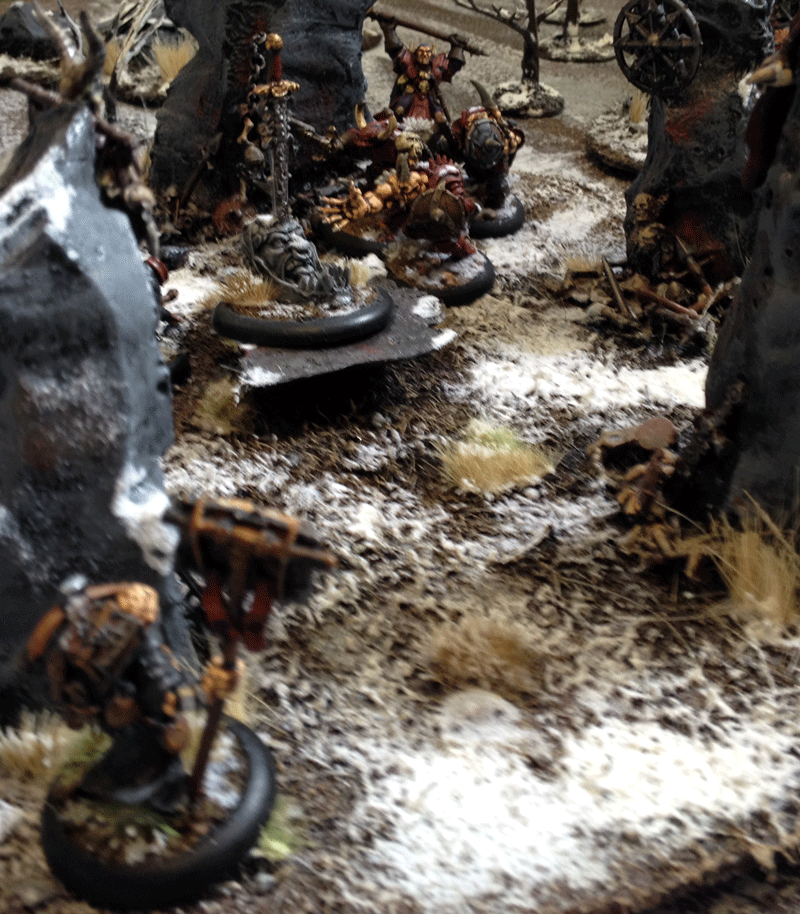
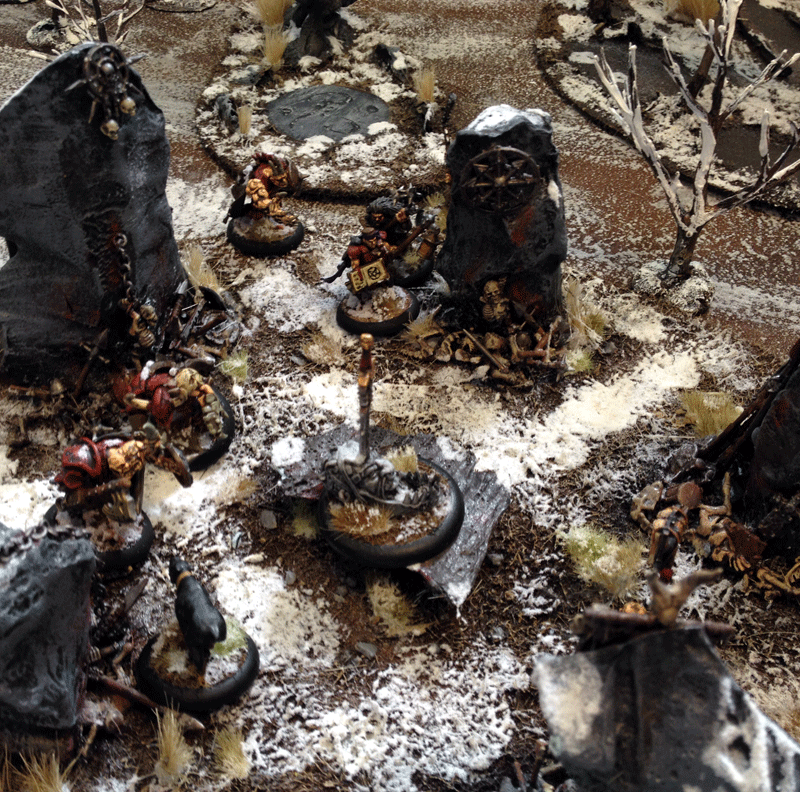
Here are some pictures form My and Jonas test games of Frostgrave last sunday.

Jonas played the Summoner Wizard with a Apprentice and 4 Men-At-Arms and I played a Signalist Wizard with a Apprentice, 2 Barbarians, 2 Archers and 2 Warhounds. The objective of the game was to capture as many as possible of the 4 trechure tookens placed on the board.


As we hadent played before we decide that the Wizards 8 spells would be all the ones from the School the Wizard belonged to, sounded greate but wasnt that fun, we really thin that the build of the Spells for each Wizard are a key to a fun game of frostgrave, so we will have to learn tha 80 spells to be able to make a good combination.

The game had a good flow and was concluded in about 90 minutes even that we had to look some in the rules during play. In retrospective we had a bit to much difficult ground so the movement was a bit to cumbersome.

Even with not to many modification the Combat and shooting system worked well, and even Wizards might be badly hurt by a lonely Archer...

One more thing we noticed was that either our Wizards had bad dice rolls or they like to hurt them sellfs...every time you fail a spell you might hurt your self...lots of failed spells during our game...

Now to the pictures...


Sunday, June 14, 2015

Frostgrave Review


I was luckey enought to get a pre-release copy of Ospreys new frantasy wargaming rules "Frostgrave" written by Joseph A. McCullough.

I have now done some reading and also had a couple of test games so I thought I would need to share some of my thoughts about the rules. Just a statement, I don´t consider me to be a Fantasy wargamer, but I do like good games in any gengre.

The Frostgrave book indeed have a high production value, It is in the usual Osprey format but Hardback wich I really like even if it will add to the price, which is set at around £15 by the way. The book are 136 pages all full coloure and are well writtes as far as I can tell as a non native English speaker. As it seems are all drawings and miniature pictures are dedicated for Frostgrawe and no re-use of old Osprey pictures.


The context of the game are a frozen city that are full of old magic arcefacts that Wizards from all around the known world have cone to seize for them self. The Wizards are accompanied by ther loyal Apprentice and a bunch of roughtneck sellswords. As all the Wizards are really self centered they ofcours don´t want to share the hidden tresaures, so there is a need for some serious disscussion...


So now you know whay you have come to the Frozen city... Your alter ego in the Game The Wizard are the main character of your warband and the only character that get experience in the campain game, but don´t be bothered about that, your Wizard won´t as he is the one and only... Your Wizard have to choose one of the 10 Wizard Types that tells you what kind of Wizard he is and What spells he can master. In each of the Types/Schools you have 8 Spells to choose from, but you are only alowed 3 of them from your primary school, the rest of them must be taken from the other schools so by the start of the game you master in total 8 spells...this gives an opportunety for some major list building.


Second are you Apprentice or at least if you chose to hire one... as each Wizard have just 500 gold crowns (gc) to hire his Warband with, the 200gc for an Apprentice are quite some sum to spend on jut one follower...but what wizard would not want to have an Apprentice that can continue his work...and you also would get one more spell caster on the table, and that, my friend, can be very usefull in Frostgrave...

Third you have all the Soldiers, that you hire to do the dirty work... there are all from Warhounds to Knights that want to get your gold and serve for you in the Frozen City, But remember that you can not have more then 8 Soldiers in you warband. That can of coures also be good as the most minis you have to paint are 10... Wizard, Apprentice and 8 Soldiers :)


The actual game rules are very basic, I think that is good as you also have to spend time to know and know when to use your spells,

Each turn start with a initiative, rolled with the only dice needed in the game a D20, highest starts to activate his Wizard and if you want up to 3 Soldiers near him, tha then secon player Activate his Wizard and so on with Apprentices and last Soldiers that wasn´t activated with the Wizard or the Apprentice, easy but still lots of tactical decissions to make.

When activated the mini can performe 2 actions: Move, Shoot, Fight, Cast Spell, Pick up stuff etc.
Movement are the basic 5-8" that are in most 28mm wargames but for Fight, Shoot and Spells you use 1D20 and add your stat-line modification, in an opposed roll to your opponent, highest wins.

There are very little other modifications to any of the action rolls, like for Close Combat there are only one modification otheren then the miniatures Fight value. Not every ones cup of the but I realy like the stripped down modifications, makes the rules move faster and you can spend more time to figure out when and how to use your spells, after all thats way we play Frostgrawe, to be a kickass Wizard.


The Basic rules are really easy and the thing I think will lift Frostgrave and make the rules fun to play are the spells, deciding which to give to your Wizard AND most of all the Campaign game, to se your Wizard develop and grow stronger with the help of his warband. One-of games might be fun for some time, but if I will continue to play Frostgrave there needs to be some thing more and the answer are the campaign system. As with the rest of Frostgrave the campaingn system are rally easy but it put one more layer to the rules and add to the fun of playing a Wizard in his quest of might.

There are also a quite large section with non-player characters like Trolls, Giants, skelletons, Zombies and other monsters that the Brave Wizards and his followers can encounter in the Frozen city. The stangest one are the Icetoad...never heard of that one...

To make the gaming even more fun there are 10 scenarios included, can´t say much about them as I haven´t plyed them out yet, but they indeed seems to give good games. The only drawback are that quite some of them state that you should have specific terrain and specific non-player miniatures, but as the crative gamers we are I´m sure that most people will handle that with ease and what minis and terrain they have at hand.

If you hope to get Elfs, Orcs, Dwarfs and other clasic fantasy stuff you will be a bit disappointed as they are not mentioned at all in the text and there are no pictures of them to be found. All the Wizards and followers are Humans as far as I can see. BUT as the rules are so generic and easy I wouldent bither to much of that and use the same stats for any fantasy Race, just choose followers that fit your race, like Archers, Trackers and Rangers if you run an Elf Wizard and for the Orc Shaman looking for magic item in Frostgrave I would use all kind of fighter Soldiers, an Ogre would work as an Barbarian maybe, the possibilities are endles. I for example use Chaos warriors as Men-at-Arms for my Summoner Wizard.

I would say that Frostgrave are a well writen game, that are easy and nice to read, you get a lot of inspiration from all the eyecandy in the book. The rules are very easy to learn, but the spells and the use of the campaign system won´t make them "to" easy so they get boring.

Even as I´m not a Fantasy wargamer I would recomend you to have a go at the Froztgrave rules, the book are at £15 but on the other hand you probably only need 10 minis to play and a game take 1-2 houres so it´s perfect for a club evening as I also think it will work very well with up to 4 player in the same game.

So pack your Magical codex, your wand and extra warm clothes as we are going to the Froze City :)


Winter is coming...sorry could not resist... ;)

Friday, June 12, 2015

Frostgrave Summoner warband

I managed to paint the small Frostgrave Warband I built from my bitbox. As they are quite demonic I decided to make the Wizard a Summoner...so he can incarnate even more demons:)

All set for tomorrows test game...

Apprentice and Wizard


Men-at-Arms


Wizard and Co.

Wizard and Co. with some major support:)

Friday, June 5, 2015

Scanian war re-basing...

I got some minis to the Scanian War project that my matey Sören painted, it was 18 minis that will be Guerillas/Snapphanar and 10 that are regular Danes. I have added one foot and one mounted officer to the regulars. Also gave the Darlicarlian a new bigger flag:)

For the foot minis I use round bases,  25mm for singel minis, 30mm for two minis and  40mm for 3 minis.


Re-based some Dragoons and Cavalry to. The multi grouped bases speed up the game a bit and I think it looks good to. For the bases with horses I used round 50mm and for the single ones pill bases 50x25mm


Sunday, May 31, 2015

Frostgrave wizards and companions

I have been reading the Frostgrave rulebook the last days...can´t help it but I get very inspired for some fantay gaming;)

So I started to look for minis in my old bitbox and found 4 old citadel wizards that will be handy...


In Frostgrave your main character ar your Wizard, his apprentice and their henchmen up to 8 of them.
If you want to red a bit more about building your warband to Frostgrave please make a visit to the author Joe´s blog.

I decided to make a Chaos Summoner Wizard for my first Frostgrave warband, just because I had a bunch of old chaos and demons bits in my bitbox

Below are some pictures of my builds, I will go for a small warband composed of:
The Wizard
The Apprentice
4 Men at Arms
This warband would cost 520 gold and you only have 500 gold... a small problem that I have to sort in some way but it won´t bother me to much...but maybe my opponent;)


Wednesday, May 27, 2015

A copy of Frostgrave in the post :)

Yesterday I recieved a pre-publication copy of Ospreys new fantasy miniature wargame rules "Frostgrave" written by Joseph A. McCullough.


I haven´t had the time to read or test the rules yet, but the production value for the book are exelent, hardback and lots of inspirational pictures both photos and drawings, first impression are good:)


Seems like the rules are for small warband with a Wizard as main character and his loyal followers, less then 10 minis needed.

It all are sett in the frozen City of Felstad. I like the ideea of a medieval winter setting...like my Baltic Crusade project...might use some of those minis as Followers in the first test games... in wait for the official Frostgrave plastic minis by North Star.

Plastic box set with 20 multipart figures from NorthStar

I will ofcourse try to put together a full review of the rules but please give me a couple of weeks to read and testplay.

The Frostgrave rules are due for publication on 20 July 2015

..."Winter is Coming"... might have been another fantasy setting ;)


.

Monday, May 25, 2015

Guerrillas on the painting table...

At my painting table I at the moment have some Scanian Guerrillas year 1676 more common known as Snapphanar...

I hade them from a box of Warlord Dragoons and Horese holders, they will be fielded in groups of 6 minis and also be used as Dragoons in TYW gaming.

Back to the Snapphane´s; A snapphane was a member of a 17th-century pro-Danish guerrilla organization that fought against the Swedes in the Second Northern and Scanian Wars, primarily in the former eastern Danish provinces which in the course of these wars became southern Sweden. Many pro-Danish guerrilla fighters referred to themselves as friskyttar, ei volunteer militiamen.


The term snapphane, which was used as a pejorative term by the Swedes to describe the pro-Danish rebels, was originally a word for gangs of bandits that lived in the woods. When Scanian exiled peasants were organized by the Danish king into bands that fought the Swedes with guerrilla methods, they were called Snapphane too.

Due to the movement's support of the Danish invasion during the Scanian War, Swedish authorities fought the snapphanes brutally, and if one was captured, he was usually executed and the corpse was impaled and shown where the locals could see it and be intimidated to obedience. Another common method was execution by having them broken on the wheel. The Snapphanes were initially rather successful, but as the war turned against Denmark the Snapphane war became more devastating.


The Snapphanes were defeated mostly by a Swedish campaign of compelling Scanian peasants swear allegiance to the Swedish king, effectively driving a wedge between Snapphane and most of the population. Instructed by the Danish king to kill loyalists the Snapphane bands turned on the local population undermining support for the Danish king.

A ruthless Swedification policy was reportedly so effective that when a Danish invasion army landed in 1709, in the wake of the Battle of Poltava, the local population was raised in a militia to fight against them. The last suspected snapphane, Nils Tuasen‚ was executed in 1700 for slaying a Swedish soldier in 1677. He had allegedly spent 22 years in exile in Denmark but ultimately returned, upon which he was arrested and put to death.

Just some painting left to do...
.

Friday, May 22, 2015

Gagnef Company, Dalecarlian Regiment 1676

At last have I painted the needed 23 minis for my Dalecarlian Regiment, 1st Batalion, 3rd Company The Gagnef Company, so its now  36 minis in the company for deployment during the Scanian War 1675-1676.

Now I need to paint me some Danish Guerrillas "Snapphanar"

Some poor pictures of the minis that are all from Wargames Factory.


Sunday, May 17, 2015

Battle at Holowczyn 1708


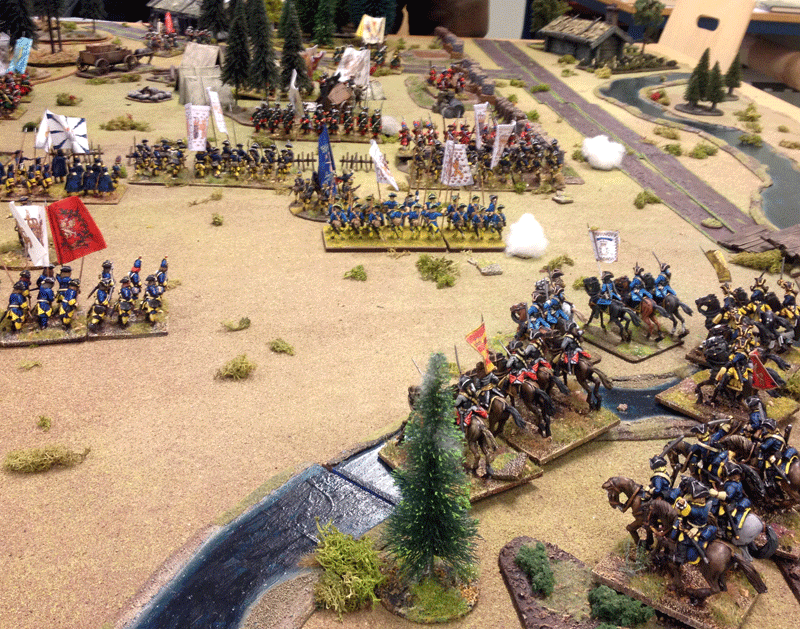
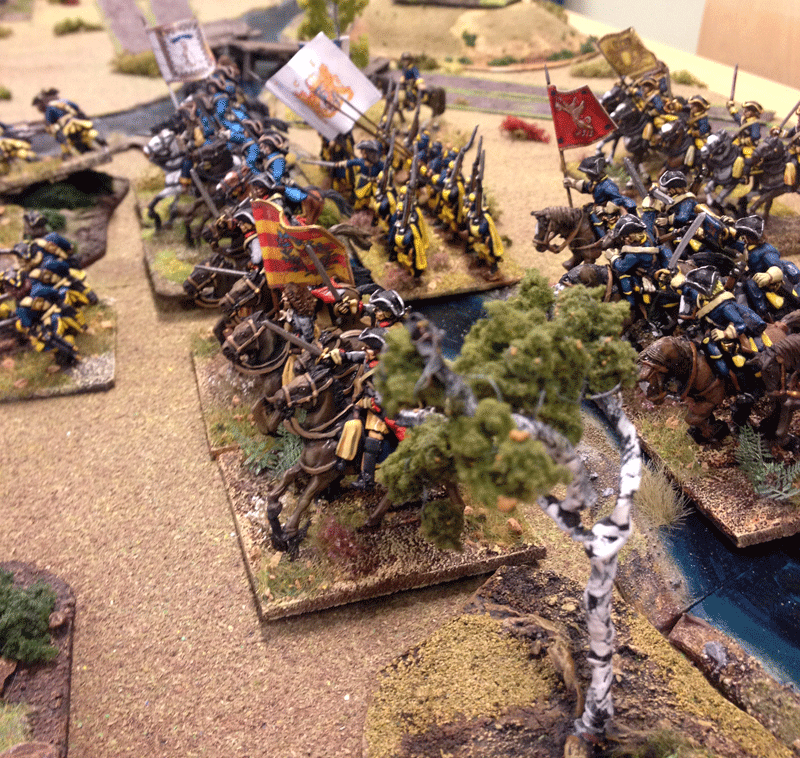
Yesterday I, Jesper and Sören was to Lincon 2015 a gaming convention in Linköping, Sweden, running av participation game of the Battle at Holowczyn 1708, a part of the Swedish war agains Russa during the Greate Norther War. We also sold Warfare Miniatures, especially the ones from their new GNW range, lovely minis:)


Historical Recap

The Battle of Holowczyn or Holofzin or Golovchin was fought between the Russian army, led by Field Marshal Boris Sheremetyev, and the Swedish army, led by Charles XII of Sweden, only 26 years of age at the time. Despite difficult natural obstacles and superior enemy artillery, the Swedes were able to achieve surprise and defeat the numerically superior Russian forces. Reportedly it was Charles' favorite victory

After dealing with Saxony-Poland, Charles was ready to take on his remaining enemy in the Great Northern War: Russia. The best route into the Russian heartland was along the continental divide from Grodno to Minsk and Smolensk. From there, Moscow could be reached without having to cross any major rivers. Charles chose instead a straighter – but more difficult – route, over the Berezina and Drut rivers. The army was moved from its winter camp near Radoszkowice in June 1708; the movement was plagued by poor road conditions and weather.

The unexpected choice of route made the Russians unsure of the Swedish intentions. In addition, with Peter I of Russia away the Field Marshal Boris Sheremetyev had to contend with the rivalry of Aleksander Menshikov. After a council of war, it was decided to draw the Russian defence line by the Dnieper River. In June and July the army was moved piecemeal towards Vabich, a marshy tributary of the Drut river.

The main force of the Russian army was deployed around the village of Vasilki, east and across the Vabich from Holowczyn. The bridges across Vabich were fortified and defended with artillery. To the south, General Anikita Repnin deployed his force and fortified his position three kilometers to the southeast. Between the two fortified camps lay marshy territory that could not be fortified.

The Swedes had observed the Russian deployment along the Vabich. Starting on 30 June, Swedish regiments started bivouacking on the heights west of Holowczyn. Charles and his followers noticed the gap in the fortifications, and decided on a plan of attack. Crossing the marshy area between the two Russian camps would not only be an unsuspected move, but would also serve to divide the enemy force in two. To ensure success, the attack was to be carried out in the darkness of night.


At midnight on 4 July the Swedes started moving quietly towards the river. Infantry carried fascines to help them traverse the waterlogged ground before crossing the Vabich on leather pontoon bridges. However, heavy rainfall made the pontoons too heavy to carry; they were left behind. At 02:30 the Russian alarm was raised as Swedish artillery started bombarding the opposite river bank. Swedish success would depend on how many troops could cross the river without the aid of pontoons before the enemy forces could arrive. Charles as so often led the charge personally, by wading across the water in front of his men. After forming with difficulty on the boggy far bank, the Swedes began to advance through the marsh. Meanwhile, fascines were laid on the river banks to assist the cavalry's crossing. Both the engineers and the Swedish vanguard began to be targeted by Repnin's artillery.

General Repnin soon saw the danger of a Swedish wedge forming between the two Russian positions, and ordered his men to decamp and head north toward Sheremetyev. Five Swedish battalions fought hard to prevent the Russian regiments from merging. Sheremetyev, hearing the sound of battle, dispatched reinforcements towards Repnin's position, but by that time enough Swedish forces had arrived to prevent these reinforcements from joining Repnin. The latter was forced to retire his forces eastwards and southwards. Swedish cavalry by now had followed the infantry across the river, and scattered their Russian counterparts towards the south.

At this point, Sheremetyev's forces were still waiting across the river from Holowczyn. They had been on full alert for hours, in the belief that the attack on Repnin was a feint and expecting the main Swedish attack to come from Holowczyn. Finally, Sheremetev took the initiative to attack the almost undefended Swedish camp to the west. However, when news of the Repnin's setback reached Sheremetev, he decided not to wait for a Swedish attack on his rear, but instead began retreating towards Shklov by the Dnieper.

The victory provided the Swedes with a defensive line along the Dnieper and the area around Mogilev could be used as a base of operations in their campaign against Russia. However, since so many of the Russian troops were able to escape it was not a decisive strategic victory.

And then the most important, the pictures from the 2 games we run.

Game 1


Game 2