Tuesday, April 16, 2013

Building a Swedish Napoleonic Soldier

I´m in the progress of building me some Swedish infantry for my Finnish War 1808-1809 Project. As I will buld every single one of them I thought I should share some pictures of how I make them, if you by any chanse also would like to make you some;)


The base for them are Perry Dismounted French Dragoon body and British Marines heads from Brigade games. I will also make som of them using the Perry British Riflemen bodys.


To make the Swedish hat out of the British Marine Heads I just gently bend the leftside hat brim stright up against the bottom of the feather. Take it easy so you don´t breake the feather, the brim or the face of the head...


Now to the carving...the  ammo box have to be moved down and the clip on the bandolier removed. I also filed and cut a hint of a belt all around the waist.

The upper part of the riding boots had to go and they was made in to a pair of gaiters that ended by the knee.


The Backpack are from a Victrix Austrian Grenadier and I used the ammo box and also the Cutlas. 

The Swedes didn´t cary the backpack as usual but more like a Haversack on the right shoulder, so I will add that to the minis that already have some belt/straping from the right shoulder, the french dragoons haven´t. 

The musket are also from some Victrix plastic kit.

Just to start glueing...


Some pictures of the almost finished mini.


I used some green stuf to cover the joints of the Muskets arms


On the left back side I will add the Cutlass and Bayonet scabbard.

I will start painting him when I build 5 more of them...


Sunday, April 14, 2013

Minis for the Finnish War the Swedes

Here we have the real challenge with my Finnish War 1808-1809 project, there are no realy good Swedish minis out there so I have to build them my self.

After some talk with my friend Mattias at Northern Wargaming I think I know how I will be able to convert decent Swedish Napoleonic soldiers for the Finnish War.

I might mention that the guys at Northern Wargaming will make some Swedes for the 1813 Campaign, but the Swedish Soldiers didn´t have the same style of uniforms as 1808.

Here are a picture of the Swedish uniform I will try to achieve, Nyland Regiment in the uniform from 1802 drwn by the Swedish Officer Carl Gustaf Gillberg (1774-1855) . Thanks Antti for the picture.


The good thing for me are that the Swdish army in finland didn´t recive the latest equipment, or any new equipment at all during the war, and after a few weeks in the field the army was a real rag-tag looking bunch, in short my Swedes will look quite battle worn;)

For the Head/Hats I will use British Marines Heads from Brigade Games, they need some work but I think they will fit the bill.

For the body I will try to uses the Perry Plastic, French Napoleonic Dismounted Dragoons and/or the British Napoleonic Riflemen and even maybe some other minis that might fit the bill.

I got all sorts of Perry/Victix plastic bits that I might need for the conversions from some nice friends so here are a BIG THANKS !!!! to them, your support have been very appreciated:
If there are a link on the name please visit theirs exellent bloggs!

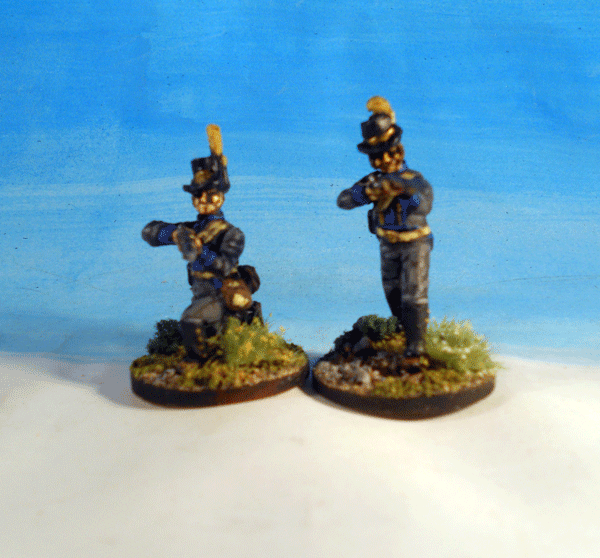
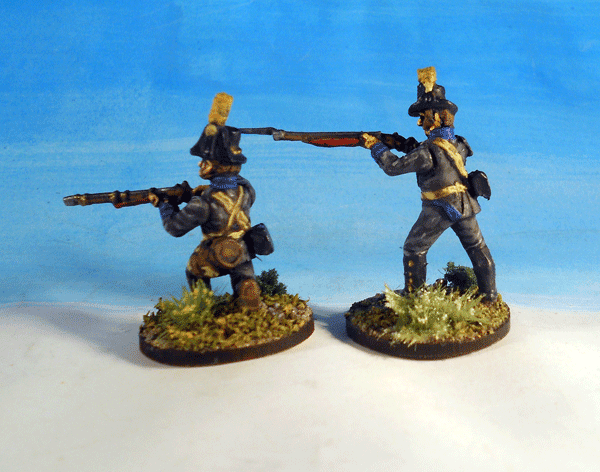
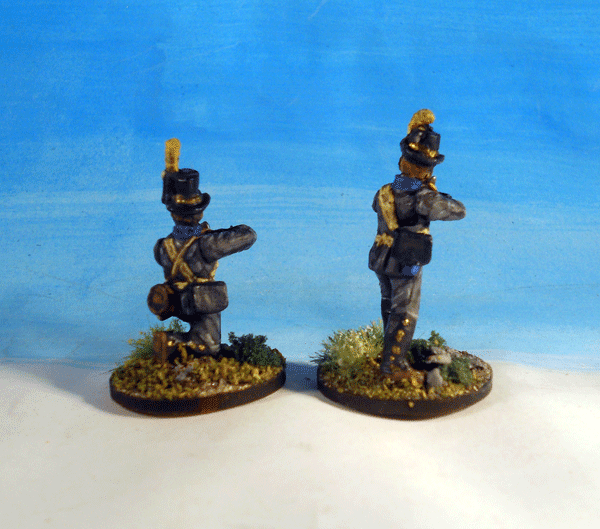
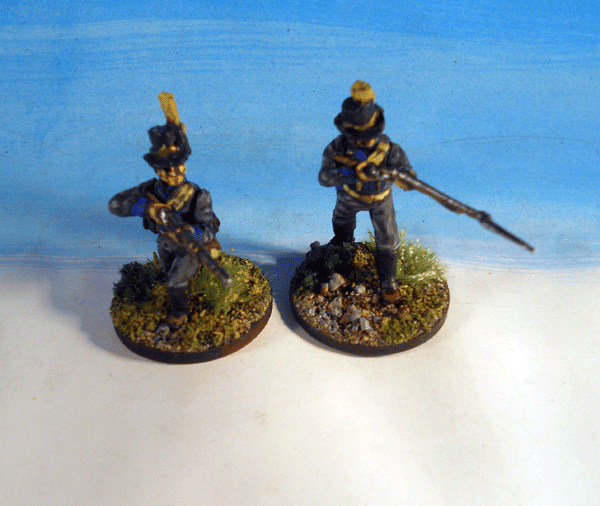
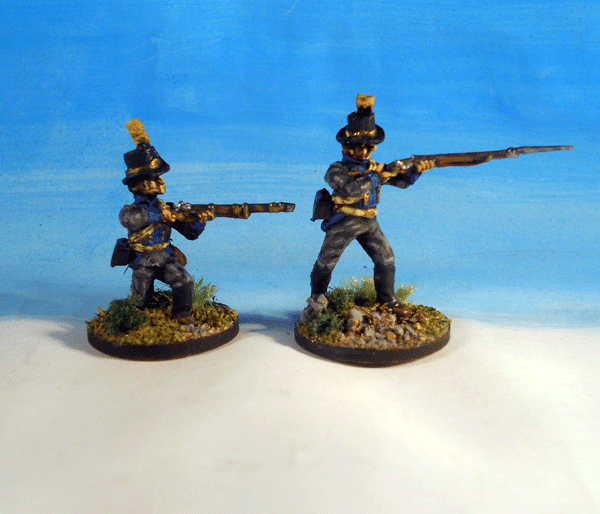
Here are a few pictures of the first two test minis I made before I decided to go for this projevt, just to check if it even was possible to make god enought Swedish troops out of Perry Plastics.


The left minis are a British Napoleonic Riflemen and the right one are a French Napoleonic Dismounted Dragoons


I will add a Cutlass and a Bayonet scabbard on the standing minis, didnt have any when I built them, But I now got a buch from Burkhart.


Now I´m of to make me some more Swedes and I´ll be sure to take some pictures of the building/conversion/carving process as I forgot it when building these two, sorry...


Friday, April 12, 2013

Muskets & Tomahawks AAR 2

I and Jonas have had our 2nd run of Muskets & Tomahawks. We used the same OOB as in our first game.

OOB 

Mohawk Indians 
1x Sachem w Rifle and Natural Talent
2x6 Warriors
2x6 Bloodthirsty Warriors

French 
1x Light Troop Officer
1x10 Compagnies Frenches de la Marine
1x6 Canadian Militia
1x5 Indians

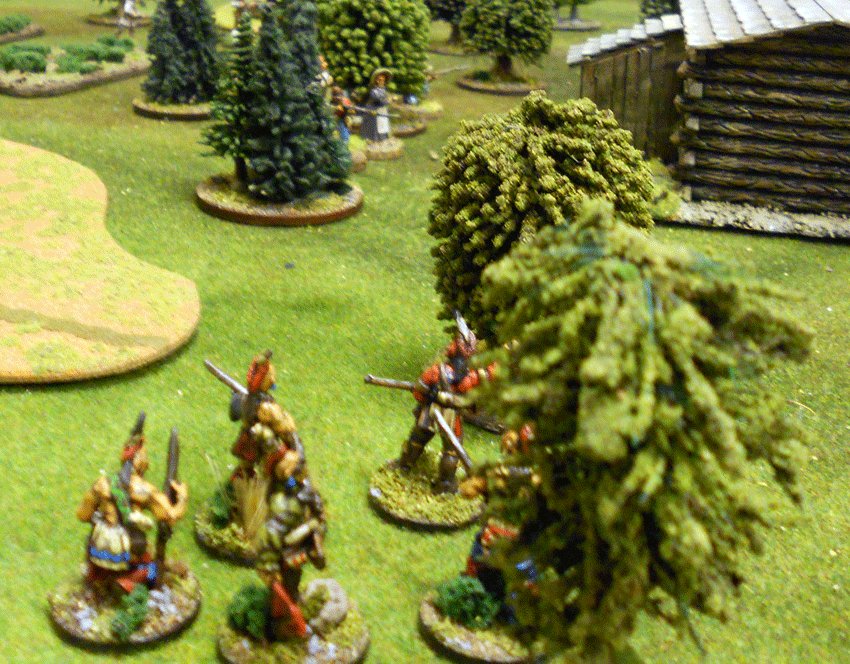
Set up of terrain by the rules, and we used the same clasification of the terrain as last time: arround the houses and the field it was considered open terrain, The templates with big trees was considered Very Difficult Terrain and the rest of the board with the light wood was considered Difficult terrain.

This time my Mohawks got the Raid Objective i.e. burn the two buildings, and Jonas Frenchmen got the Scouting Objective once again.

Both sides started with all their units on blinds, the Mohawks on table and the Frenchmen of table.


As all units deployed hidden you only can see the minis if you look realy hard;) 

The French civiliand seems to have been evacuated in time...


After a swift advance throught the light wood the Mohawks sent in some groups with torches to set the buildings on fire. One of the buildings was blasing after a few seconds but the other building was harder to set alight... No sign of the froggies...


Suddenly a group of Huron Warriors opened fire in the forest, but as last time they coulden even hit a barn from the inside:)


On the Mohawks right flank the Frenchmens had sent a large group of  Compagnies Frenches de la Marine, they had so far only made some careful movement as there was 2 Mohawk blinds in the way... both dummys but Jonas didn´t know:)


At last the Mohawks manage to set the second building on fire, at the sam time the Compagnies Frenches de la Marine open an uneffective fire on long range at them...


On the Mohawk left flank the Huron warriors had advanced just to see themselfs surounded by Bloodthirsty Mohawks... thought they learnd the lesson last time... no Hurons managed to escape...


On the Mohawk right flank the large group of Compagnies Frenches de la Marine had continued their advance through the forest, moving around the Mohawks by the houses to be able to clain the last quarter of the area scouted, soon they would as the path seemed to be cleare...


But in a serie of fast moves the Mohawk Sachem managed to redeploy part of his warband to meet up and block the path of the Compagnies Frenches de la Marine. At the same time on the other side of the farmstead a group of Canadian Militia was slaughtered to the last man by some bloodthirsty Mohawk warriors !

This time we played out some 4-5 turns I think and it was a very entertaining game. I find my Mohawks very fun to play, I consider to use more Bloodthirsty groups as thats the way I have inflicted almost all casualtys.

Jonas was some what frustrated after the game, mentioned thet he was going home to change the OOB of his warband and paint some alternating minis...

The rules run smother this time, still some rules we forgot and rules that need to be checked on the forum.

More games to follow:)


Thursday, April 11, 2013

300...


...Followers !!!

It´s a milestone in my blog adventure to reach 300 followers !!!

Thanks to you all that have shown interest in my miniature project and attempt to shed some light over different part of the Swedish history.

A special thank you to all that take their time to post comment, keeps one to continue the work when geting some feedback and support, very appreciated:)

I hope you all have a nice weekend and a good Salute for all you lucky one that are goning, might see you there next year...

Best regards Michael


Wednesday, April 10, 2013

Even more Russian Napoleonic Jaegers

Here are some picture of my newly finished Russian Napoleonic Jaegers for my Finnish War 1808-1809 project.

This will be a good start for some initial gaming of the skirmish fighting during the invasions first days in February 1808...yes it was -30C and extreme much snow...

You might have notised my basing...not realy snow, but you will have to cope anyway as after the initial days of skirmishing in February the Swedish army started a long retreat according to the overall Swedish strategy.

Ofcourse there was some small skirmishing during the retreat, but the real fighting started in the end of April 1808, yes still lots of snow but closer to spring and the right basing for my minis:)

Now I´m of to build and paint me some Swedish infantry...

All minis from Brigade Games.


Monday, April 8, 2013

Medieval Bishop

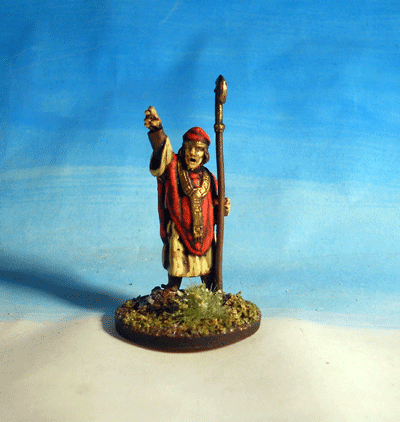
Have had this Gripping Beast mini at my painting station for quite some time and never realy got around painting him until now...

Suppouse he will act as the dreaded Swedish Archbishop Jöns Bengtsson of the House Oxenstierna for my 15th centery Kalmar Union War project.


Saturday, April 6, 2013

Muskets & Tomahawks AAR 1

Some weeks ago I and Jonas had out first tryout of the Muskets & Tomahawk rules. I run my Mohawks and Jonas his Frogeaters;)

OOB

Mohawk Indians
1x Sachem w Rifle and Natural Talent
2x6 Warriors
2x6 Bloodthirsty Warriors

French
1x Light Troop Officer
1x10 Compagnies Frenches de la Marine
1x6 Canadian Militia
1x5 Indians

We set up the terrain per the rules and rolled for scenarios, my Mohawks got the Slaughter objective and Jonas French men got the Scout objective, so Jonas also added 20points of free Civilians that I was to try to Slaughter... We have later understand that the ones haveing the Slaughter Objective seems to have a greate advantage...

As both forces was Indians and/or Irregulars they started on blinds, we used singel minis with a postit piece under the base to tell if they where a real unit or a dummy, worked fine as we both disslike gaming tables with "confetti" on:)

Now some pictures from the game:


The French Civilians was deployed on the back side of the cabin, Jonas hoping to be able to get them away and meet hes troop arriving from of table...

The single Mohawks are the blinds for hiden movement.

A note about the terrain, arround the houses and the field it was considered open terrain, The templates with big trees was considered Very Difficult Terrain and the rest of the board with the light wood was considered Difficult terrain.


A group of Bloodthirsty Mohawks made a swift advance on the left flank to try to catch the fleeing Civilians that got caught up by the Difficult terrain...


A group of Mohawk warriors seeking cover in the field and behind a fence to give fire support to the Mohawks moving in for the kill...


The Compagnies Frenches de la Marine moved quickly to try to save the poor Civilians...BUT not quick enough as just in close sight they witness a the Slaughter of all the civilians... anti climax for the froggys in turn one !

We decided to play out the whole turn to try out the rules some more...


2 Mohawk blinds on the right flank.


The frenchmen sent in the Canadian Militia to help out to pick of the Mohawks...but to no vain...


Fire support from the cornfield... and the french officer seems to try to save his own skin...


The small group of Hurons that sided with the French meet up with a Bloodthirsty bunch of Mohawks...a good end for the Mohawks in this very short first try out game...

Even though our game turned out very short it was a nice first tryout of the rules. We surley forgott several rules but we also discovered plenty of rules that was not clearly writen/explained in the rules, we will have to take some time to run through the Studio Tomahawk forum in search for answers

There will absolutely be more Muskets & Tomahawk games played:)


Thursday, April 4, 2013

Napoleonic Russian Jaegers

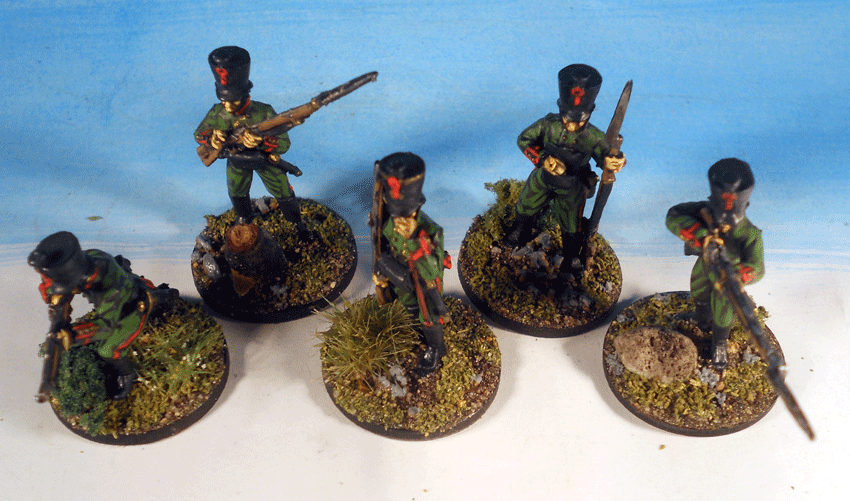
Here comes some pictures of the first minis for my Finnish War 1808-1809 project. I have started my painting with 16 Russian Jaegers, here are the 5 first.

All minis from Brigade Games.


Tuesday, April 2, 2013

Minis for the Finnish War - Russians

For my new Finnish War 1808-1809 project I will of course use 28mm minis:)

For the Russians it was quite easy as Brigade Games have bought and produce the old Vitrix metal range sculped by the talanted Paul Hicks.

So I ordered a pack each of these packs:
  • Russian Chasseur command 1805-1808 
  • Russian Chasseurs firing 1805-1808
  • Russian line infantry command marching 1805-1808 
  • Russian Musketeers Firing 1805-1808 
  • Russian mounted/foot colonels 1805-1808
These packs are giving me 16 Jaegers, 16 Line infantry and 3 senior Officers, enought for some small skirmish games.

If I want to expand the Russians I might get me a pack of the Warlord Napoleonic Wars: Russian Line Infantry (1809-15) plastic boxed set. Maybe alsoe some Perry Plastic French Hussars, should work fine as Russians to, at least for me that don´t are a expert in the napoleonic era.

I have started to paint the Russian Jaegers so here are a work in progress picture of them.


After a wash of Dewland Mud...

The First starts to get a green high light


Sunday, March 31, 2013

Building some Swedish houses

Here are some pictures of how I built some Houses for my Finnish War project as well as my Medieval settings, at least the gray one that you have seen in a Baltic Crusade AAR.

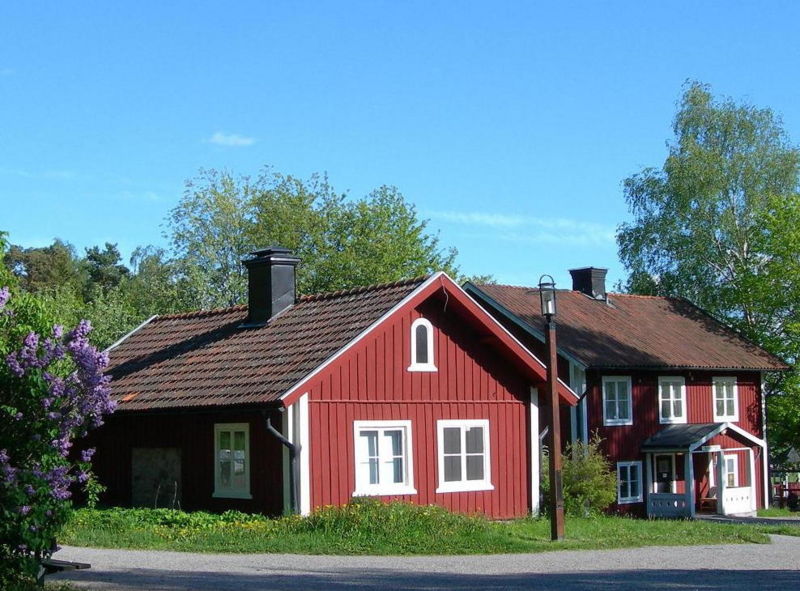
The red house are bases on the numerous "Soldattorp" in english I think it would be "Soldierscottage". The Soldierscottage was where the Swedish soldiers and their familys lived in peace time.

The allotment system (Swedish: indelningsverket; Finnish: ruotujakolaitos) was a system used in Sweden for keeping a trained army at all times. This system came into use in around 1640, and was replaced in the early 1900s by the Swedish Armed Forces conscription system. The soldiers who were part of these systems were known as "tenement soldiers" (indelta soldater, the Swedish term, does not have the same meaning) due to the small tenements or crofts allotted to them. You can read more about the Swdish allotment system here.


Back to the building of the houses, I used a very nice house kit from Pegasus Hobbies "Russian Log Houses"


The Box contained 2 identical houses, the scale are 1/72 but I think they work fine for 28mm to.


I cut down the side walls on both houses so I would get a  less pointy roof and on the one that  also would be used for my medieval projects I filled one window and used the sides without windows as Swedish medieval houses just had few small, if any, "windows". 


PVA glue and a terry cloth towel to make the grass roof.


Medieval house to the left and the 19th century house to the right, ready for soem painting.


The Medieval house was painted gray as untreated logs turn gray by time. The 19th century house got the typical swedish deep red paint with white bargeboards.

About the Falu Red paint
Falu red or Falun red (pronounced "FAH-loo", in Swedish Falu rödfärg (Swedish pronunciation: [ˈfɑːlɵ ˈrøːfærj])) is the name of a Swedish, deep red paint well known for its use on wooden cottages and barns.

The paint originated from the copper mine at Falun in Dalarna, Sweden. The traditional colour remains popular today due to its effectiveness in preserving wood. In Finland, it is known as punamulta ("red earth") after the pigment, very finely divided hematite. Since the binder is starch, the paint is permeable to water.

The earliest evidence of its use dates from the 16th century. During the 17th century Falu red was commonly used on smaller wooden mansions, where it was intended to imitate buildings with brick facing. Except in bigger cities like Stockholm and Gothenburg, and in the far south of Sweden, wood was the dominating building material.

In the Swedish cities and towns, buildings were often painted with Falu red until the early 19th century, when the authorities began to oppose use of the paint. At that point in time more and more wooden buildings in urban areas were either painted in lighter colours (e.g. yellow, white) or sided with stucco. The number of buildings made of bricks (with stucco) also increased.
However Falu red saw a surge in popularity in the countryside during the 19th century, when also poorer farmers and crofters began to paint their houses. Falu red is still widely used in the Swedish countryside. The common Finnish expression punainen tupa ja perunamaa "a red house and a potato field", referring to idyllic nuclear family life in a separate house, is a direct allusion to a country house painted in Falu red.

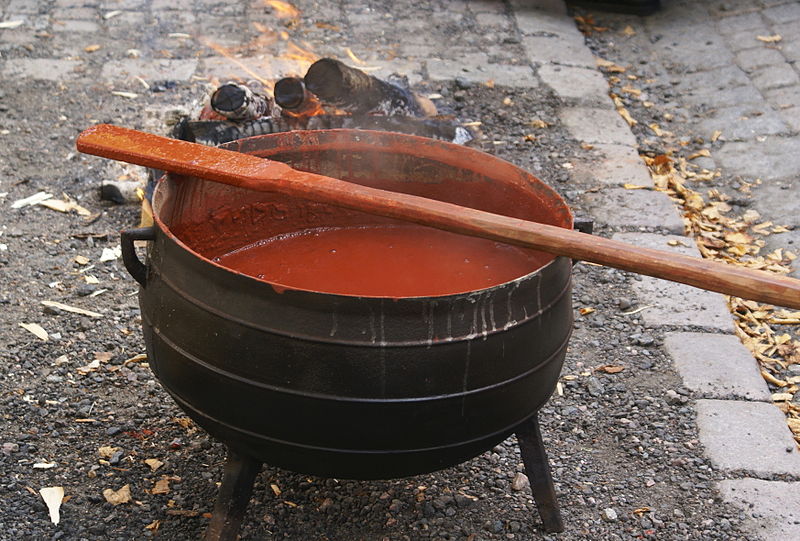
Falu red during manufacturing

The actual colour may be different depending on how much the oxide is burnt, ranging from almost black to a bright, light red. Different tones of red have been popular at different times. Recently a mix giving a dark green colour, Falu Grön, has also been produced by mixing black and ochre.

The paint consists of water, rye flour, linseed oil and tailings from the copper mines of Falun which contain silicates iron oxides, copper compounds and zinc. The current recipe was finalized in the 1920s. Aging Falu red will flake off, but restoration is easy since only brushing off of the loose flakes is required before repainting.

A traditional Finnish falu red log house in Äänekoski, Central Finland

Traditional Swedish houses in the countryside, painted with Falu red paint.