As some of you already guessed, the all out Swedish hero during the Finnish War must have been George Carl von Döbeln, of course we have few more aspire to the title, like
J.A. Sandels.
For me von Döbeln is a perfect character as he was in command of the Nyland Regiment during the first 3-4 month of the war.
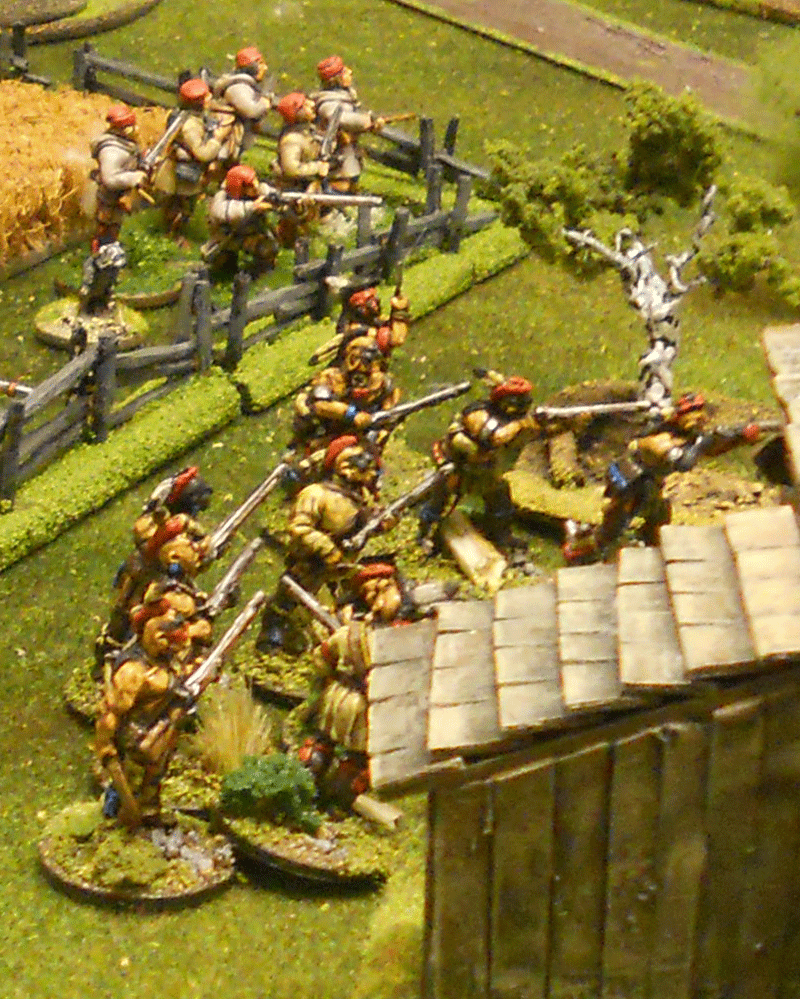
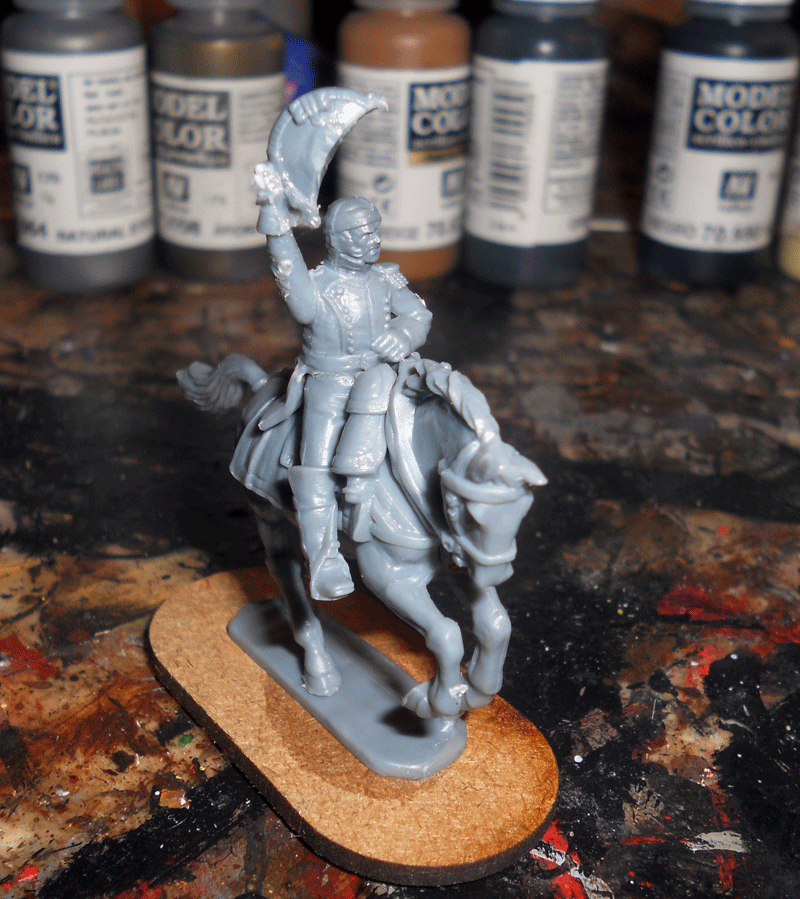
Here comes some pictures of my finished mini and a short re-cap of von Döbelns history.
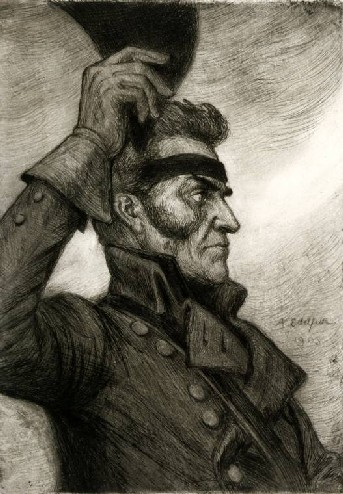
Georg Carl von Döbeln (29 April 1758 – 16 February 1820) was a Swedish friherre (baron), Lieutenant General and war hero..
Georg Carl was born at the Stora Torpa manor in Segerstads parish in Västergötland (now Falköping Municipality) to Johan Jakob von Döbeln and Anna Maria Lindgren. When von Döbeln was eight years old his father died and he was put in school by relatives with the aim of him becoming a priest.
The boy however, showed affinity for a military life and he was enrolled at the Karlskrona naval academy in 1773. Upon graduating as an officer in 1775, he was directed by the family towards a career in law. Disliking this, he sought employment as a junior officer in 1778.
His first commission after graduation was in 1778 as a second adjutant at Sprengtporten recruited regiment in which he already after a few weeks was promoted to second lieutenant. After hearing about the American Revolution, he wanted to join the Americans and went in 1780 to France.
After more than a year's stay in Paris, he was hired in 1781 as an officer at the Count De La Marcks regiment, who had orders to be shipped to America, but at the last moment diverted to India. von Döbeln took part and was wounded in the
Siege/Battle of Cuddalore and was promoted in September 1783 to captain. Between 1784-88 he was De la Marcks adjutant and had the possibility to meet a young Napoleon Bonapart.
As a lieutenant, Döbeln took part in Gustav III's Russian War and was shot in the head at the Battle of Porrassalmi. The wound did not heal properly and he was forced to wear a black silken bandanna for the rest of his life. During the operation he stayed awake and wrote about it while looking at the whole process with the help of a mirror.
He then rapidly advanced to colonel and took part in the Finnish War. On 13 September 1808, he led the Swedish troops in the Battle of Jutas. For this, he would become legendary as the main hero of the war. His reputation was further enhanced when Johan Ludvig Runeberg wrote his epic Döbeln at Jutas in the Finnish National Poem Fänrik Ståls Sägner (in Swedish).
He successfully led the Swedish retreat from the Åland islands over the frozen Baltic sea. Having re-organized his troops, he engaged Russian forces which ultimately stopped a planned attack on the Swedish capital, Stockholm.
He successfully led the Swedish retreat from the Åland islands over the frozen Baltic sea. Having re-organized his troops, he engaged Russian forces which ultimately stopped a planned attack on the Swedish capital, Stockholm.
Döbeln was the commanding officer of the North Army on 8 October 1809, when the last formal ties between Sweden and Finland were cut through the dismissal of the last Swedish-Finnish army in the church park of Umeå in Västerbotten North Sweden. Döbeln's final orders to the parading army, issued verbally prior to dismissal, is considered to be the very essence of rhetoric in Swedish, and has been taught to generations of school-children.
In the Second War against Napoleon he led troops in Swedish Pomerania and sent troops to relieve Hamburg, which was besieged by the French, without authorisation. For this, he was court-martialled and sentenced to be executed. However, he was pardoned by Crown Prince Charles John, later crowned Charles XIV John of Sweden.
He was married to Kristina Karolina Ullström (they later divorced). The couple had one son, Napoleon (1802–1847). Although popular, having had a great career and after his death considered a war hero, von Döbeln lived his last years forgotten and impoverished.